
Stopping Power That Responds When You Need It
Brake Repair & Replacement in Columbia and surrounding areas for vehicles with squeaking, grinding, or soft pedal issuesv
Brake pads wear down through friction against rotors every time you slow or stop your vehicle, eventually reaching the point where metal backing plates contact rotor surfaces, causing grinding noise and reduced stopping effectiveness. At Your Service Car Care LLC provides brake repair and replacement services in West Columbia, performing the work at your location with the tools and components needed to restore safe braking performance. Mobile service means you avoid driving on compromised brakes to reach a repair shop.
The service addresses squeaking caused by worn pad material, grinding from metal-on-metal contact, soft or spongy pedal feel indicating air in brake lines or low fluid levels, and pulsating pedals that signal warped rotors. Technicians inspect pad thickness, measure rotor surface condition, test brake fluid quality, and check caliper operation to determine whether you need pad replacement alone or full rotor resurfacing and component rebuilds. ABS system diagnostics identify sensor failures or module issues that trigger warning lights.
Request a brake system inspection to evaluate pad wear, rotor condition, and fluid quality before issues affect stopping distance.
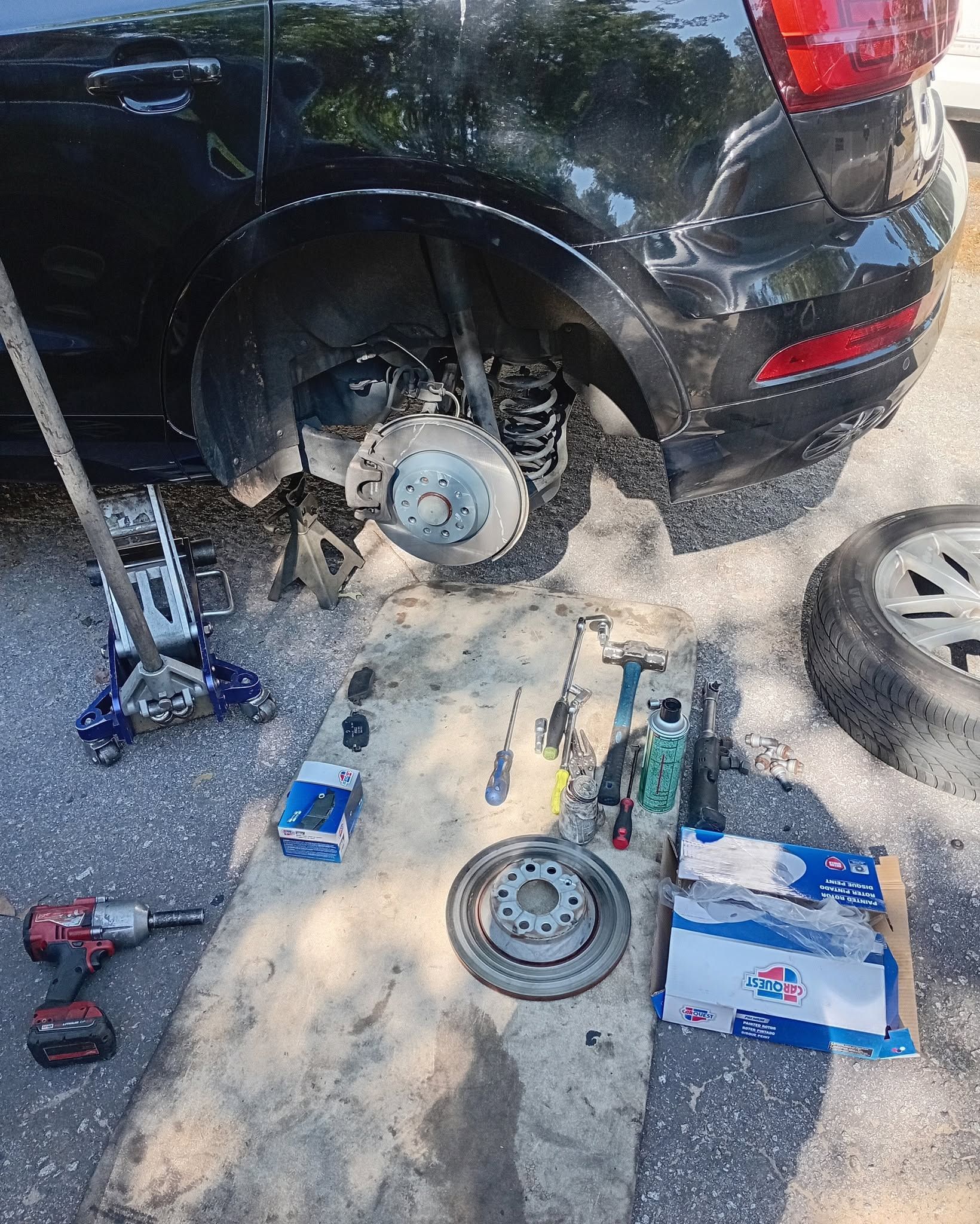
How Brake Service Restores Safe Stopping
Brake pad replacement involves removing wheels, retracting caliper pistons, installing new friction material, and verifying even contact with rotor surfaces. Rotors are measured for minimum thickness specifications and checked for scoring, heat cracks, or warping that prevents smooth pad contact. When rotors fall below thickness limits or show damage, replacement becomes necessary to maintain proper heat dissipation and consistent braking force across all wheels.
Once brake repair is finished, you'll notice firm pedal response that requires consistent pressure rather than sinking toward the floor, quiet operation without squealing or grinding during normal stops, and straight-line braking without pulling to one side. The vehicle stops in shorter distances with predictable pedal feel, and ABS systems function correctly during emergency braking without false activation. Brake fluid flush removes moisture that accumulates over time and lowers boiling point, preventing fade during repeated hard stops or mountain driving.
Brake wear rates vary significantly based on driving habits, with frequent stop-and-go traffic accelerating pad consumption compared to highway driving. Front brakes typically wear faster than rear brakes because weight transfers forward during deceleration, placing more demand on front calipers. Regular inspections catch wear before safety margins disappear completely.
Questions About Brake Repair and Safety
Brake system concerns raise immediate questions about safety, necessary repairs, and when to schedule service. These answers clarify what different symptoms indicate.
How much pad material needs to remain before replacement becomes necessary?
Most brake pads include wear indicators that create squealing when material thickness drops below three millimeters. Waiting until grinding occurs means rotors have likely sustained damage requiring replacement rather than resurfacing.
What causes brake pedal pulsation during stops?
Pulsation typically indicates warped rotors caused by uneven heat distribution or over-torqued lug nuts that distort rotor mounting surfaces. The pulsing you feel is the pad contact varying as the rotor rotates through high and low spots.
Can brake service be performed safely at my location without a lift?
Mobile brake service uses floor jacks and jack stands that meet safety standards for supporting vehicle weight during wheel removal. The process follows the same safety protocols as shop-based repairs, with proper support and wheel chocking.
Why do brakes sometimes squeal even after new pads are installed?
New pad material requires a break-in period to transfer a thin layer of friction material onto rotor surfaces. Squealing during this period is normal unless it persists beyond the first hundred miles, which may indicate incorrect pad compound selection or contaminated rotors.
How does humidity in West Columbia affect brake fluid maintenance?
Brake fluid is hygroscopic, meaning it absorbs moisture from air over time. High humidity accelerates this process, lowering fluid boiling point and potentially causing brake fade. Fluid should be flushed every two to three years regardless of mileage in humid climates.
At Your Service Car Care LLC completes brake inspections, pad replacement, rotor service, and fluid maintenance at your location, restoring the stopping power your vehicle needs for safe operation. Book a brake evaluation appointment to address the specific symptoms affecting your vehicle's braking performance.