
Ride Quality That Handles Road Surfaces
Suspension Repair in Columbia and surrounding areas for vehicles with rough ride, handling issues, or uneven tire wear
Suspension components absorb impacts from road irregularities and maintain tire contact with pavement during turns and lane changes, but shocks, struts, control arms, and bushings wear out gradually through constant compression and rebound cycles. When these parts fail, you experience a rough, jarring ride over bumps, the vehicle leans excessively during turns, or steering feels vague and unresponsive. At Your Service Car Care LLC handles suspension repair in West Columbia, diagnosing worn components and performing replacements at your location to restore ride comfort, handling precision, and tire longevity. The mobile approach means you don't drive on compromised suspension to reach a repair facility.
The service addresses shock and strut failures that no longer dampen spring oscillation, worn control arm bushings that allow excessive movement in suspension geometry, and failed ball joints or tie rod ends that create loose steering feel. Technicians inspect for leaking fluid from shock bodies, check bushing condition for cracking and separation, measure tire wear patterns that indicate alignment issues caused by suspension damage, and test steering response to identify components with excessive play.
Arrange a suspension inspection to evaluate component wear and identify the specific parts affecting ride quality and handling stability.
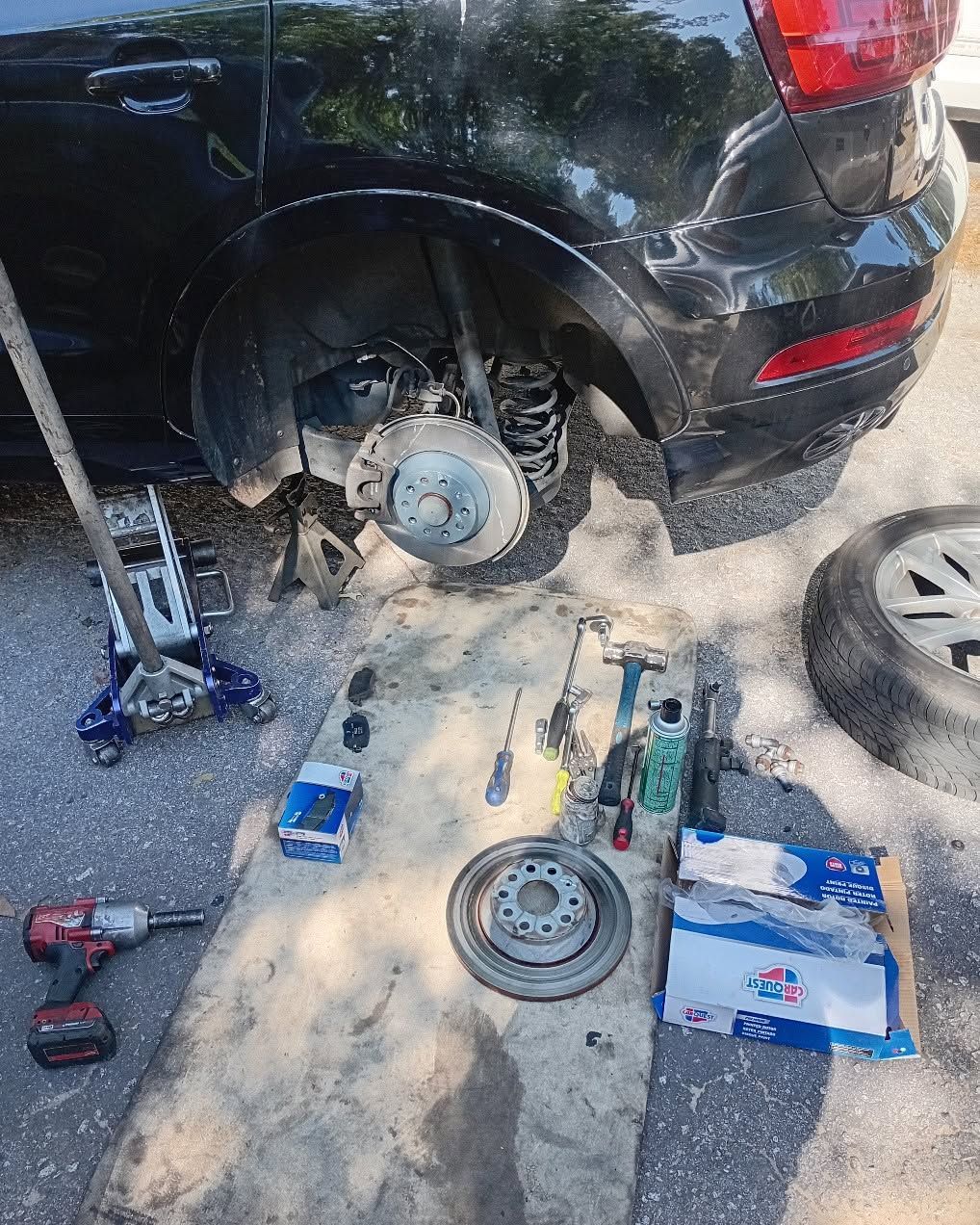
What Changes After Front and Rear Suspension Repair
Shock and strut replacement restores the damping force that controls spring movement, preventing the bouncing and body roll that worn dampers allow. Control arm and bushing replacement eliminates the clunking sounds over bumps and ensures suspension geometry maintains proper camber and caster angles as the suspension travels through its range. These repairs require precise torque specifications and proper tightening sequence to prevent premature bushing failure or loosening during operation.
Once suspension repair is finished, you'll notice the vehicle no longer bounces excessively after hitting bumps, body lean during turns is controlled and predictable, and steering input produces immediate tire response without delay or wandering. Ride comfort improves dramatically over rough pavement, the vehicle tracks straight without constant steering correction, and tire wear becomes even across the tread rather than showing feathering or cupping patterns. These changes make the vehicle feel more stable at highway speeds and more controlled during emergency maneuvers.
Suspension wear accelerates on roads with potholes, frost heaves, or poor pavement conditions common in some areas after winter weather cycles. Components also deteriorate faster when vehicles regularly carry heavy loads or tow trailers, increasing stress beyond normal passenger car use. Inspecting suspension components during routine maintenance catches failures before they cause tire damage or affect vehicle control.
What Property Owners Usually Ask
Suspension problems create noticeable changes in how vehicles drive and handle, prompting questions about what needs replacement and how the repair process works.
How do I know if shocks or struts need replacement?
The bounce test provides a quick check by pressing down firmly on each corner of the vehicle and releasing. If the vehicle bounces more than once before settling, the dampers are worn. Fluid leaks on shock bodies or cupped tire wear patterns also indicate failure.
What causes clunking noises from the front suspension over bumps?
Clunking typically comes from worn control arm bushings, failed sway bar links, or loose ball joints that allow metal-to-metal contact as suspension components move. The noise is most noticeable over speed bumps or when turning while going over uneven surfaces.
Can suspension repair be completed without wheel alignment equipment?
Component replacement can be performed at your location, but alignment requires specialized equipment to measure and adjust camber, caster, and toe angles. Mobile service completes the repair work, and alignment can be arranged afterward if needed based on tire wear patterns.
Why does uneven tire wear indicate suspension problems?
Suspension geometry controls tire contact angle with the road. Worn bushings or damaged components allow angles to shift outside specifications, causing tires to scrub rather than roll smoothly. Inner or outer edge wear shows camber issues, while feathering indicates toe misalignment often caused by suspension movement.
How does West Columbia road conditions affect suspension lifespan?
Potholes and rough pavement create impact loads that accelerate bushing deterioration and shock wear. Roads that experience freeze-thaw cycles develop surface irregularities that increase suspension stress compared to consistently smooth pavement.
At Your Service Car Care LLC diagnoses suspension component wear and performs shock, strut, control arm, and bushing replacement at your location, addressing the parts that affect ride comfort and handling stability. Schedule a suspension diagnostic appointment to determine which components need service based on your vehicle's symptoms.